
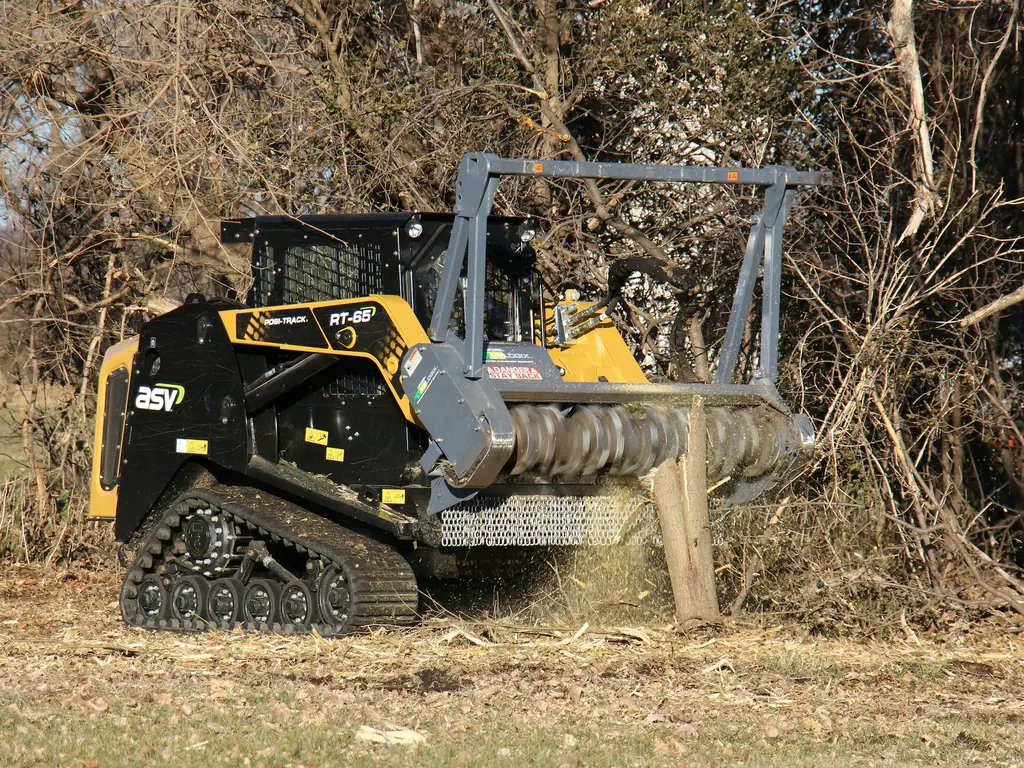
Forestry Mulching
A forestry mulcher grinds brush and small trees into mulch where they stand. The mulch covers the ground, and the roots stay in the soil.
Learn More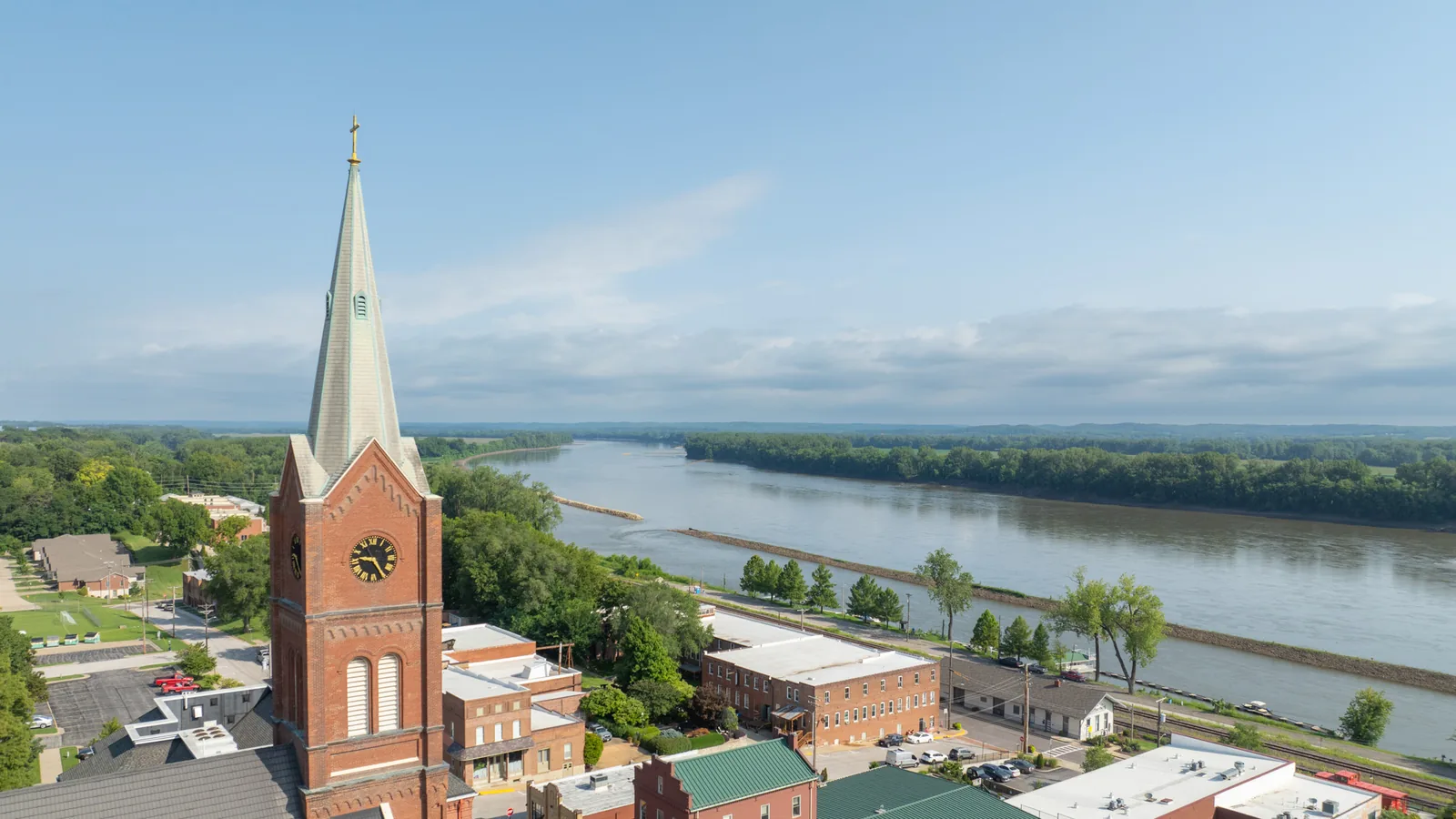
Washington sits along the Missouri River, on the northern edge of the Ozarks. Much of the town stands on hills of wind-blown silt that drop to creek bottoms and the river. In the farms and woods around it, idle pasture fills with eastern red cedar and bush honeysuckle. A lot left alone can turn into a wall of brush on a hillside.
Emerald Valley Landworks is a land clearing company based in High Ridge, and Washington is part of our service area. We clear overgrown lots and small acreage here with compact equipment. Forestry mulching grinds cedar and brush where it stands and leaves the mulch on the ground. Call or text (636) 893-3897, and we look at the job and put the quote in writing.
Tell us what the property needs and where it is. We look at the job and put the quote in writing.
The 2022 Census of Agriculture counted 1,657 farms in Franklin County. More than four in ten were under 50 acres. Woodland made up about a quarter of that farmland, and pasture about a fifth.
The Missouri Department of Conservation says eastern red cedar grows in pastures and old fields across the state. It adds that bush honeysuckle forms dense thickets in woods and along fencerows. Left alone, an open field or a fence line can close in.
Our land clearing is sized for lots and small acreage. With more ground than that, tell us what you have and we will say whether it fits us. For a single back yard or building lot, our lot clearing page covers the work. A tree service takes the big trees down first, and we clear what is left.
Federal soil survey maps show Menfro silt loam under about six in ten acres inside the city. Menfro formed in loess, silt the wind laid down long ago. It drains well, and it covers both gentle and steep hillsides.
Much of that Menfro is mapped as eroded on slopes of 5 to 14 percent. Eroded means the slope has already lost part of its topsoil. About 8 percent of the city sits on Menfro slopes of 20 to 45 percent.
The low ground is different. Along Busch Creek and Dubois Creek, the maps show silt loam that floods often. Soils on the Missouri River bottom are mapped as frequently flooded too. Of the peaks on record at the USGS gauge in Washington, the highest came in May 2017.
On a slope, bare dirt washes when it rains hard. The city's stormwater page says clearing and grading can raise the amount and rate of runoff. A forestry mulcher leaves a layer of mulch over the soil instead of bare ground.
Inside city limits, the Engineering Department handles grading permits and stormwater questions. The city requires a grading permit when work disturbs more than 5,000 square feet of ground. Moving 50 cubic yards of material, or changing the grade more than 2 feet, calls for one too.
Any work in a floodplain needs the city's Floodplain Development Permit. FEMA publishes the official flood maps that show those zones. Outside city limits, Franklin County's Planning and Zoning Department handles floodplain administration for unincorporated land. The county's Building Department posts its own erosion control and stormwater regulation.
The right office answers the permit question, and we point you there before work starts. Ditches and swales on private land are usually the owner's to keep up, the city says. When water runs across a hillside yard toward the house, yard drainage work gives it a path.
Before any digging, Missouri law asks whoever digs to contact 811 at least two working days ahead. The day of the request does not count, and the utilities then mark their lines.
The 2020 Census counted 14,500 people in Washington. Census estimates put the median home's build year at 1978. About one home in six went up before 1940, and about one in four in 2000 or later. Nearly three in four are single-family detached houses.
Clearing any lot can turn up stumps from trees cut long ago. Stump grinding takes them below the surface so the ground can be mowed or built on. What happens to the grindings is written in the quote.
Communities and areas we serve around Washington: Downtown Washington, Fifth Street corridor, Front Street, Bluff Road, Old Highway 100, Highway A, Highway 100, Highway 47, Busch Creek, Dubois Creek, Phoenix Park, Lions Lake.
Washington ZIP codes served: 63090.
Washington is part of our service area. We look at the job first, then put the quote in writing.
(636) 893-3897 A forestry mulcher grinds brush and small trees into mulch where they stand. The mulch covers the ground, and the roots stay in the soil.
Learn More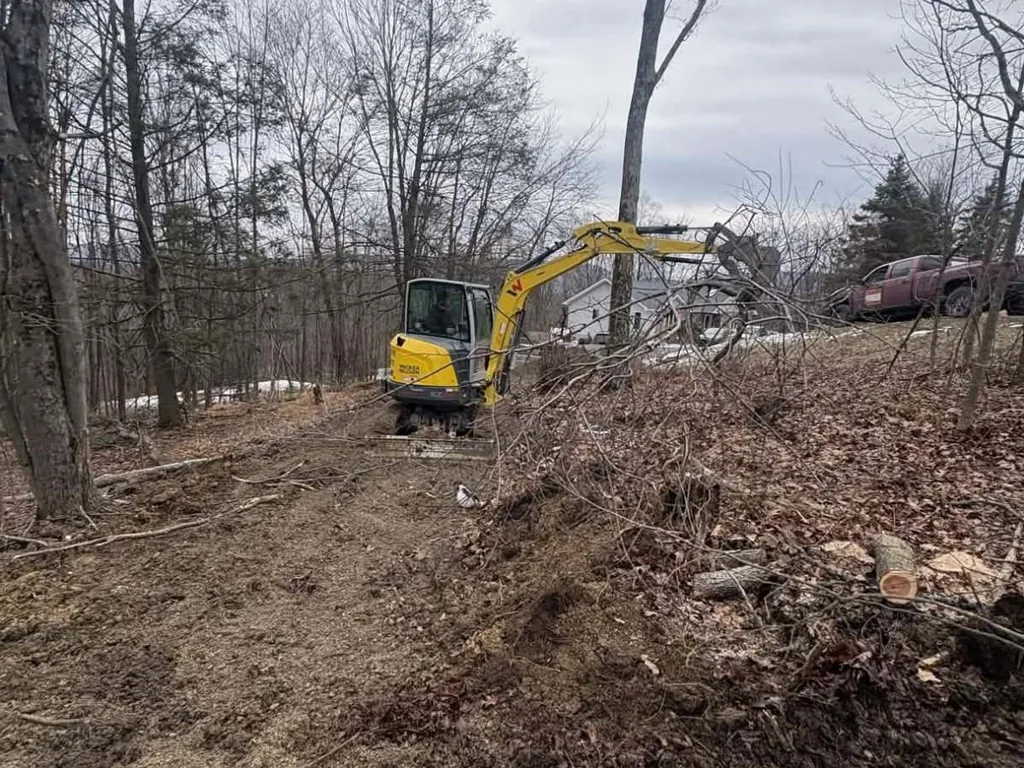
We clear one overgrown lot or back yard of brush, vines, saplings and small trees. You get the ground back so you can use it again.
Learn More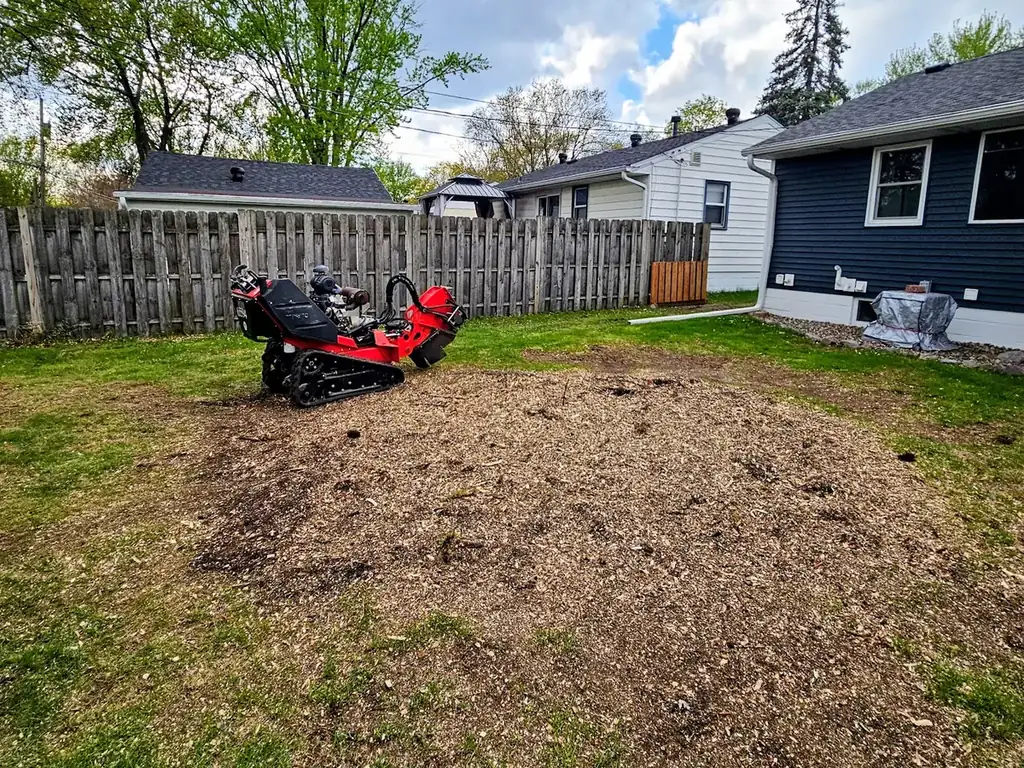
We grind stumps below the soil line with a stump grinder, one stump or a yard full. What happens to the grindings is written in the quote.
Learn More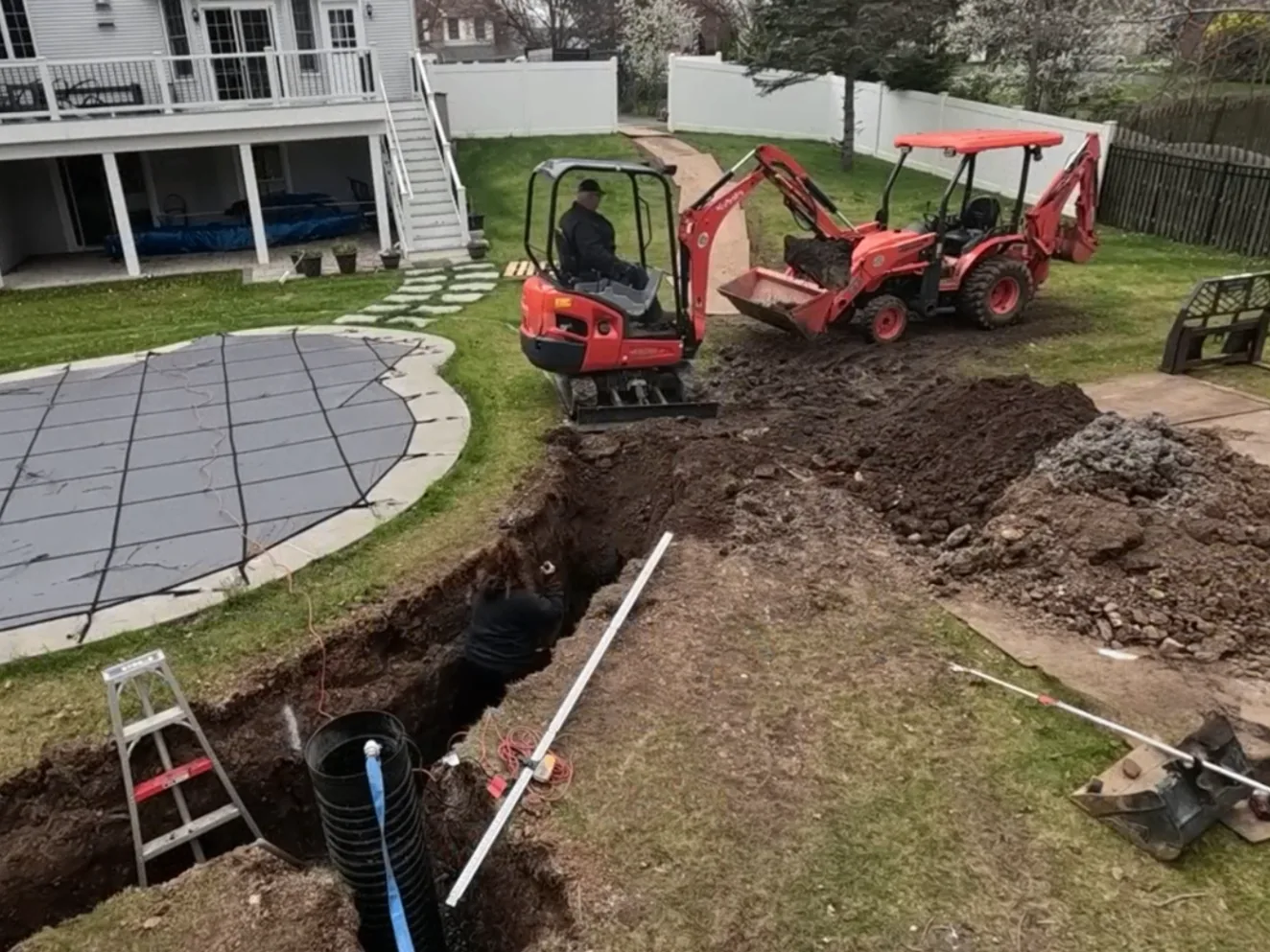
Light excavation with a mini excavator for trenches and tight back yards. We backfill and grade the ground smooth where we dug.
Learn More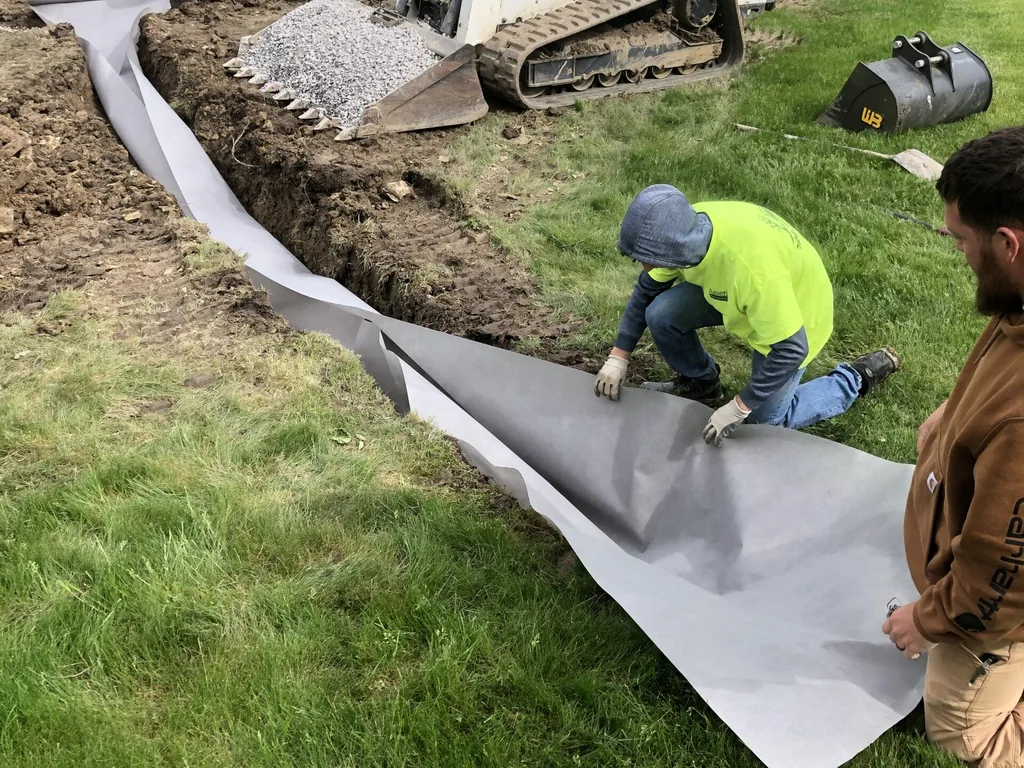
Exterior French drains for soggy yards and wet ground along the house, dug with a mini excavator. Perforated pipe in washed stone carries the water to an outlet on lower ground.
Learn More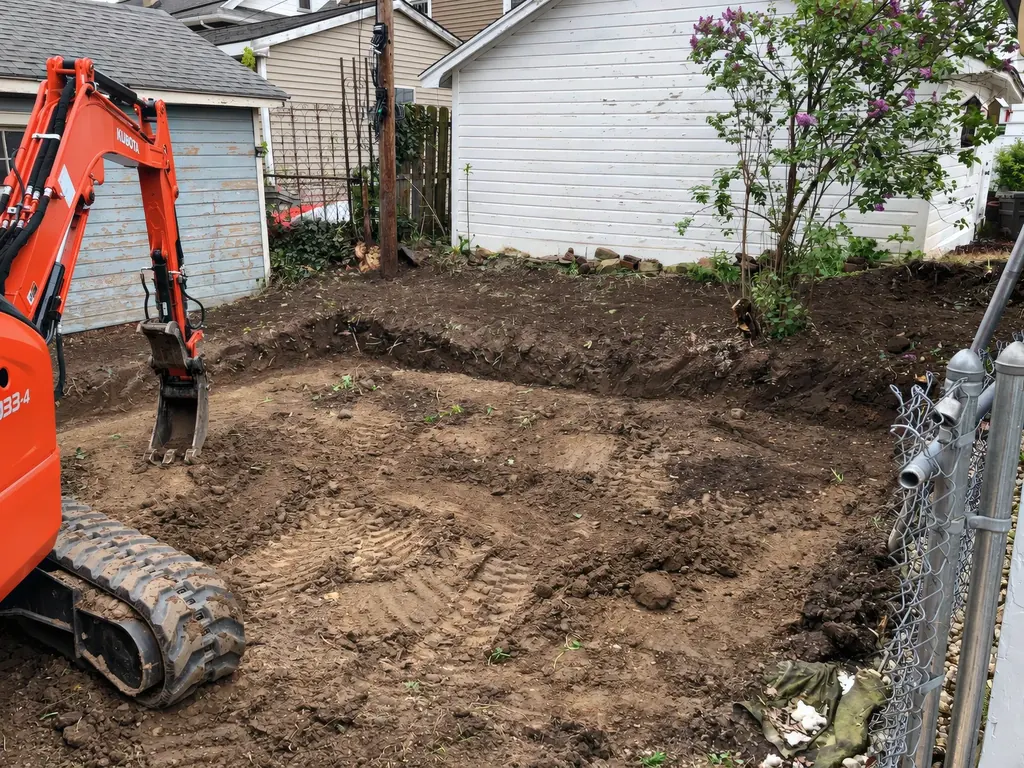
We find out why your yard holds water, then fix it with the method that fits. A mini excavator does the digging, even in tight back yards.
Learn More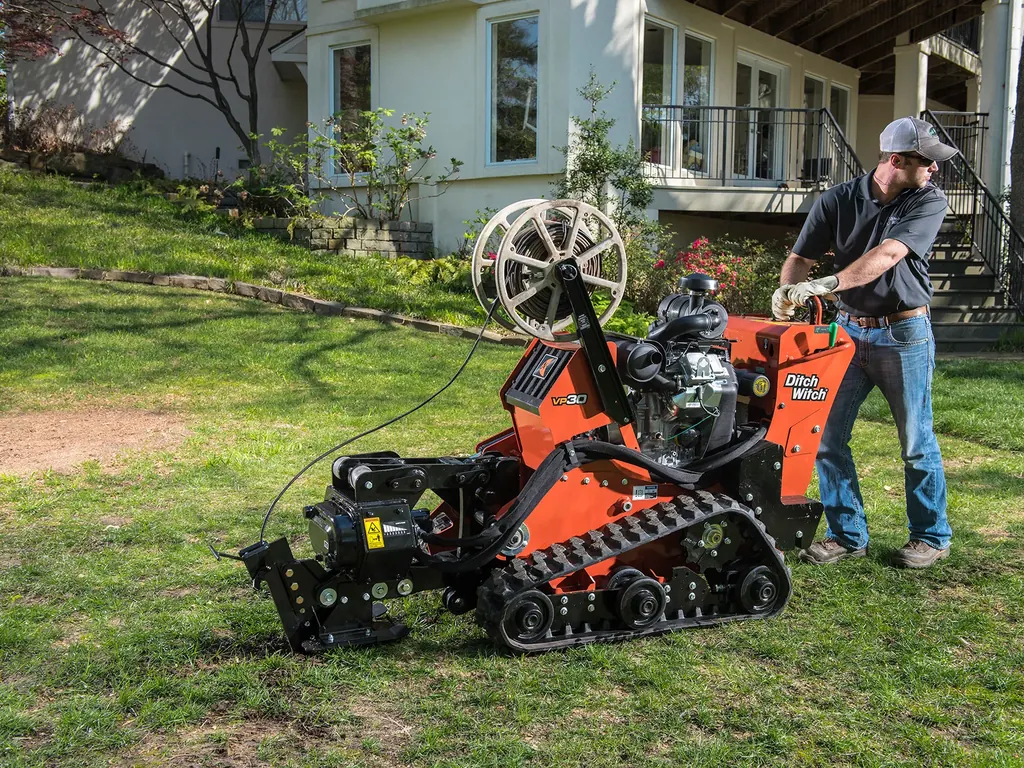
We install new in-ground sprinkler systems for lawns around St. Louis, laid out in zones. The lines go in through narrow trenches, and the yard goes back over them.
Learn MoreA few of the questions we hear most around Washington. If yours is not here, call or text and ask.
Tell us what needs clearing or digging and the town it is in, and text photos if you have them. Call or text (636) 893-3897, or send the form and we will get back to you.
Tell us what the property needs and where it is. We look at the job and put the quote in writing.