
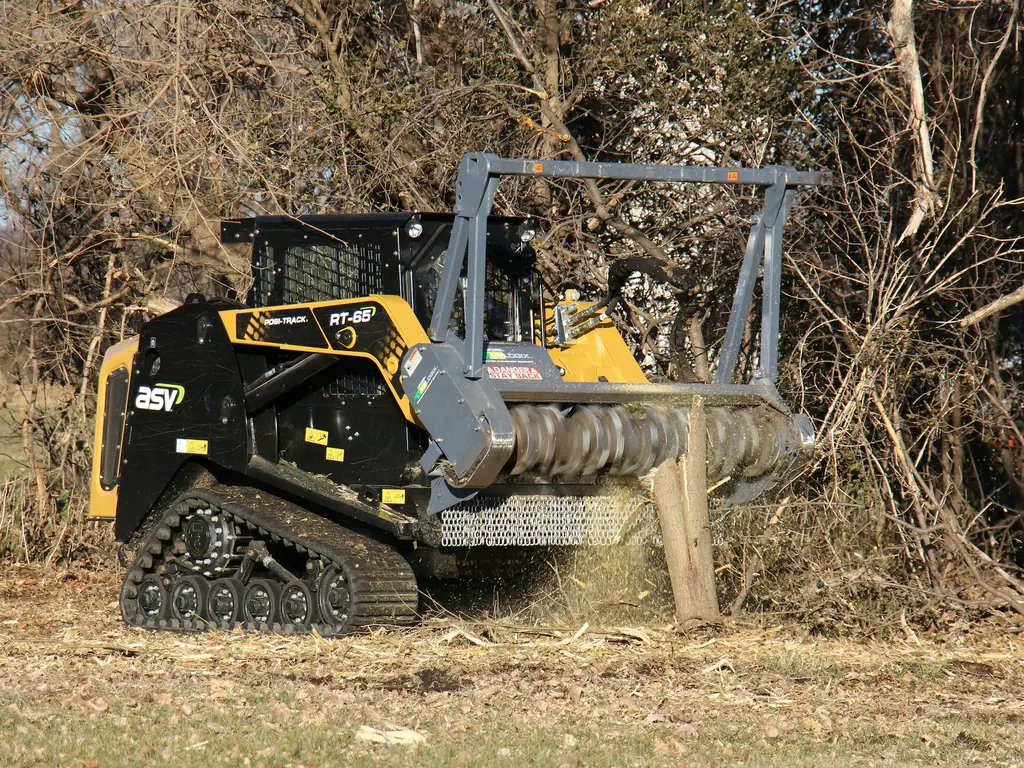
Forestry Mulching
A forestry mulcher grinds brush and small trees into mulch where they stand. The mulch covers the ground, and the roots stay in the soil.
Learn More
Land clearing in St. Peters usually means one part of a yard. Census estimates say about 7 in 10 homes here went up from 1970 to 1999. Brush has had time to fill the strip along a creek or the back fence. Just as often, the bigger problem is a wet low spot or a row of old stumps.
St. Peters is part of our service area at Emerald Valley Landworks. We clear brush and small trees with compact equipment, and we dig drainage fixes with a mini excavator. It is the same land clearing we offer across the St. Louis area, scaled to a suburban lot. Call or text (636) 893-3897, and we will look at the job and put the quote in writing.
Tell us what the property needs and where it is. We look at the job and put the quote in writing.
By Census estimates, the typical St. Peters home was built around 1988. About two in three homes here are detached houses. New building is modest now: the Census Bureau counted 77 single-family permits in 2025. So most clearing here means taking back part of a lot that already has a house on it.
Left alone, the back edge of a lot can fill with bush honeysuckle. The Missouri Department of Conservation says two bush honeysuckles cause the invasive problems seen most often in Missouri. They shade out native seedlings and spread from the roots. For lot clearing, a forestry mulcher on a compact machine grinds that growth down where it stands.
St. Peters became the first Tree City USA in St. Charles County in 1999. Its Parks Department enforces land clearing restrictions under the city's Tree and Landscape Ordinance. On a site over 3 acres, clearing more than half the woods requires reforestation. If you own that much wooded ground, ask the city before work starts.
The Missouri Department of Conservation reported emerald ash borer in St. Charles County by 2015. The agency expects untreated ash trees in an infested area to die in time. A tree service takes a dead tree down first, and the stump stays behind. Where several ash trees lined a fence, that leaves a row of stumps.
We grind each stump below the ground with a stump grinder, one stump or a whole fence line of them. What happens to the grindings is written in the quote. Read how stump grinding works and what is left afterward.
One exception sits by the street. St. Peters maintains its public trees, including street trees in the right-of-way. A stump in that strip is a question for the city first. Residents can also send tree questions to the city's Ask the Arborist program.
The USDA soil survey maps more than half of St. Peters as Harvester-Urban land complex. Harvester is a silty soil formed in loess, a wind-blown silt. The survey rates it slow to soak up water once it is wet. Urban land is the survey's term for ground under houses and pavement, which sends more rain running off.
Dardenne Creek runs past Old Town St. Peters. Along the creek, the survey maps frequently flooded soils such as Dockery silt loam. Glen Travis Park, a city park, is more than 12 acres of pin oak swamp. A yard near low ground like that can stay soggy long after the street dries.
The city maintains the street inlets and storm sewer pipes that carry runoff to the creeks. Voters approved Prop P, a half-cent sales tax for stormwater and parks projects. The city has been replacing undersized storm sewers to ease localized flooding near the Hermitage and Golden Hills Estates subdivisions.
Every year, the city's building department inspects the outside of every property in St. Peters. Its checklist includes areas of erosion and low spots where stagnant water collects. It also flags stormwater sent straight onto public pavement or a neighbor's lot. Disconnected or missing downspout sections are on the list too.
Yard drainage work starts with finding where the water comes from and where it can go. A buried downspout line can carry roof water away from the foundation and let it out in the lawn. That matches the city's own advice to let downspouts drain into the yard instead of piping them to the curb.
For a long soggy stretch along a fence or a foundation, a French drain may fit better. It collects water in a stone-filled trench and carries it in a perforated pipe to an outlet. Where that outlet empties matters, since the inspection flags water sent onto a neighbor's lot. The city's building department can tell you whether a drainage change needs a permit.
Communities and areas we serve around St. Peters: Old Town St. Peters, Mid Rivers Mall, 370 Lakeside Park, Dardenne Creek, Spencer Creek Park, Brookmount, Bellemeade, Orchard Hills, Jungermann Road, Mexico Road, Spencer Road, Willott Road.
St. Peters ZIP codes served: 63376, 63304, 63303.
St. Peters is part of our service area. We look at the job first, then put the quote in writing.
(636) 893-3897 A forestry mulcher grinds brush and small trees into mulch where they stand. The mulch covers the ground, and the roots stay in the soil.
Learn More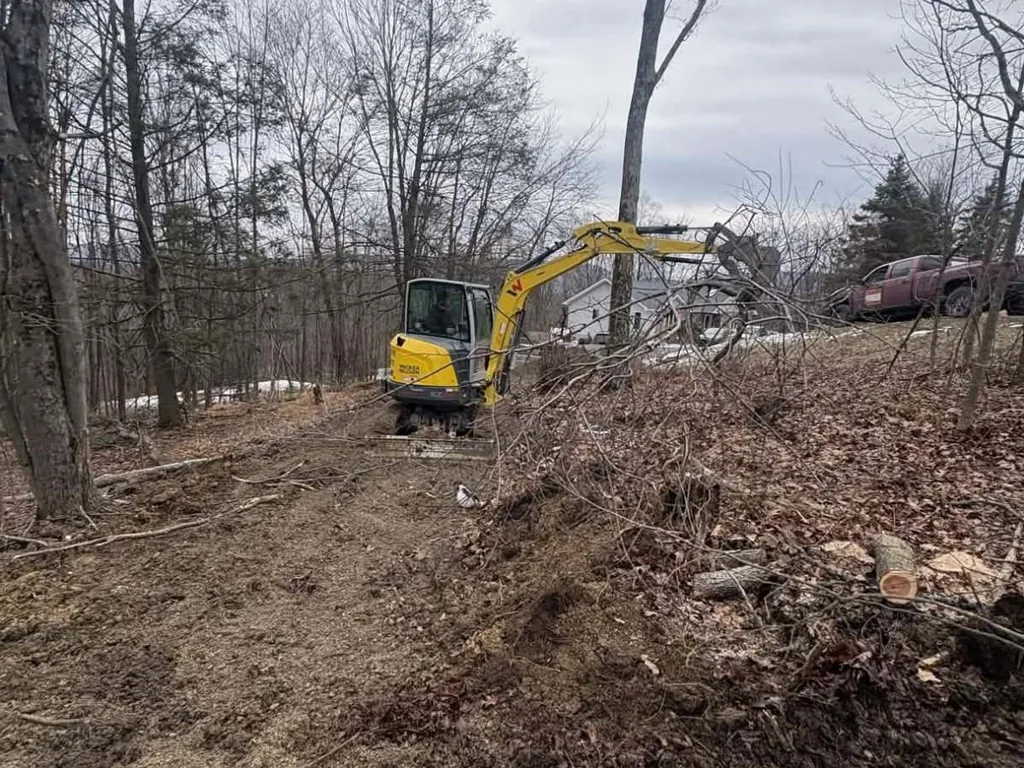
We clear one overgrown lot or back yard of brush, vines, saplings and small trees. You get the ground back so you can use it again.
Learn More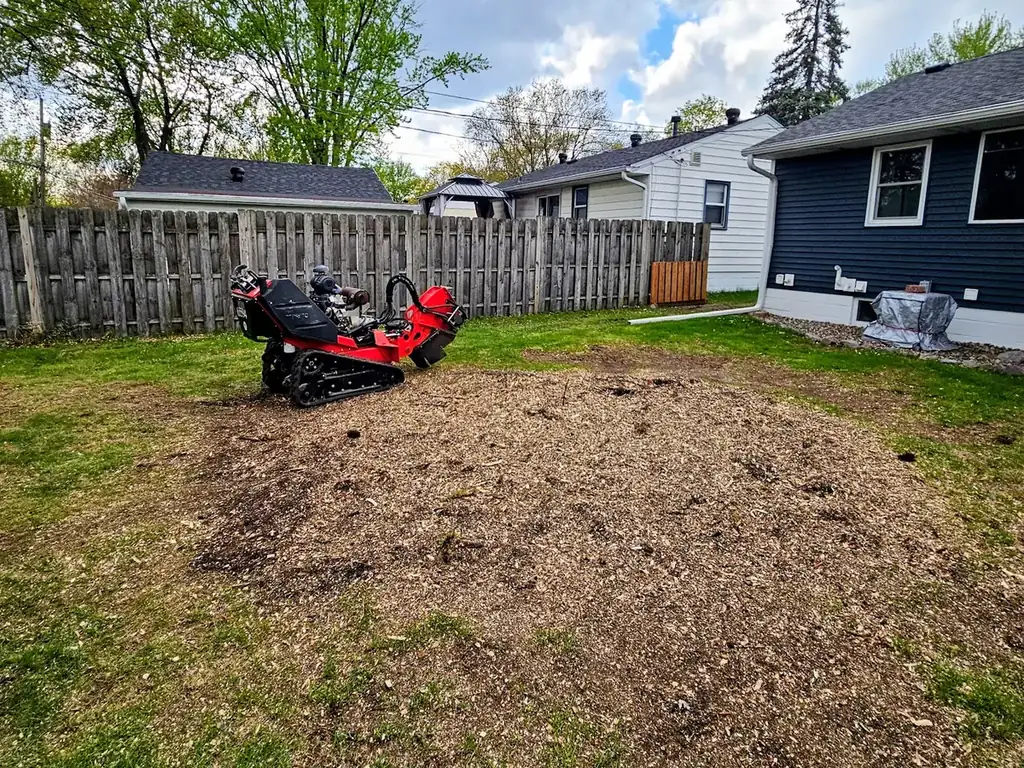
We grind stumps below the soil line with a stump grinder, one stump or a yard full. What happens to the grindings is written in the quote.
Learn More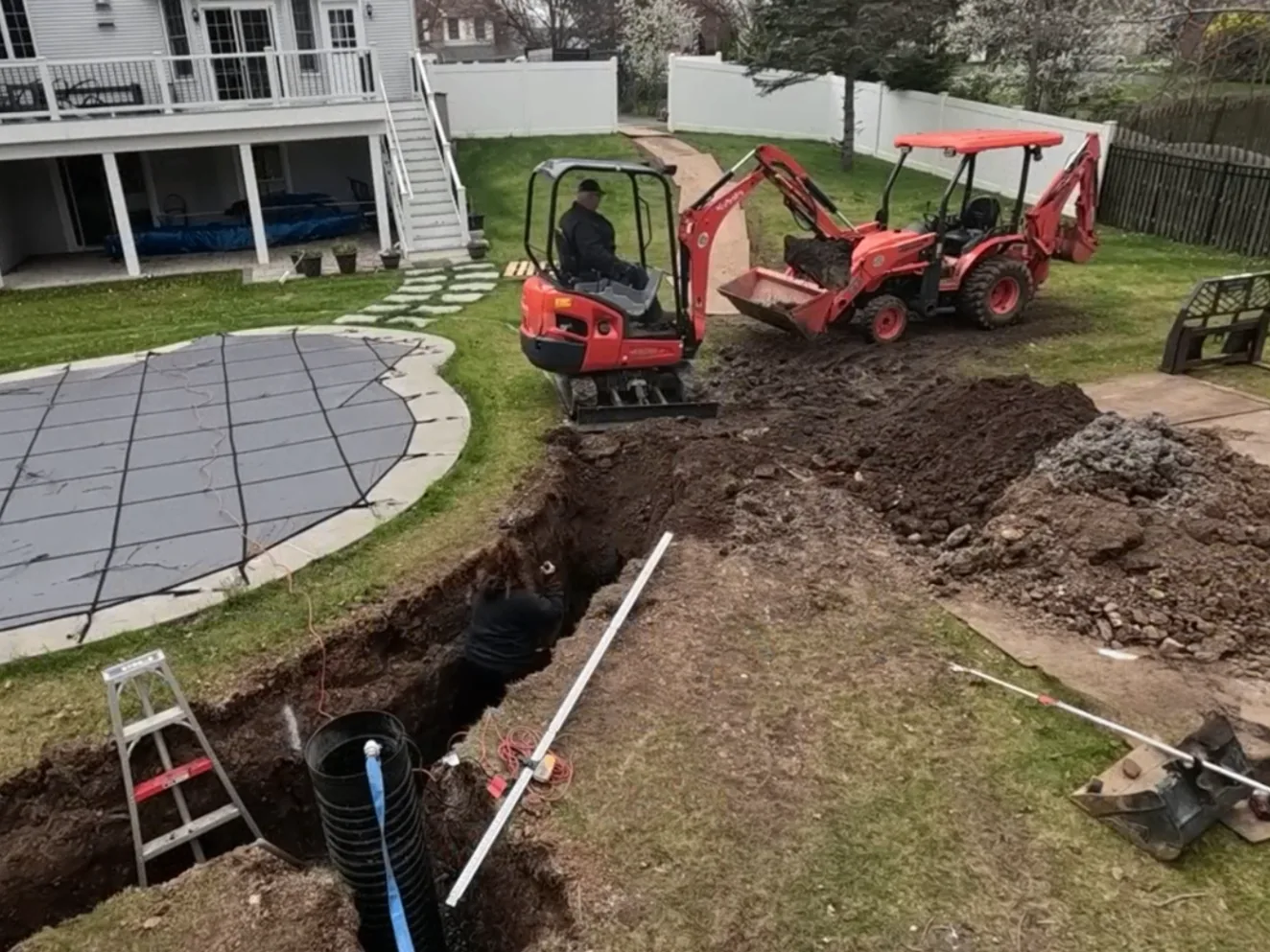
Light excavation with a mini excavator for trenches and tight back yards. We backfill and grade the ground smooth where we dug.
Learn More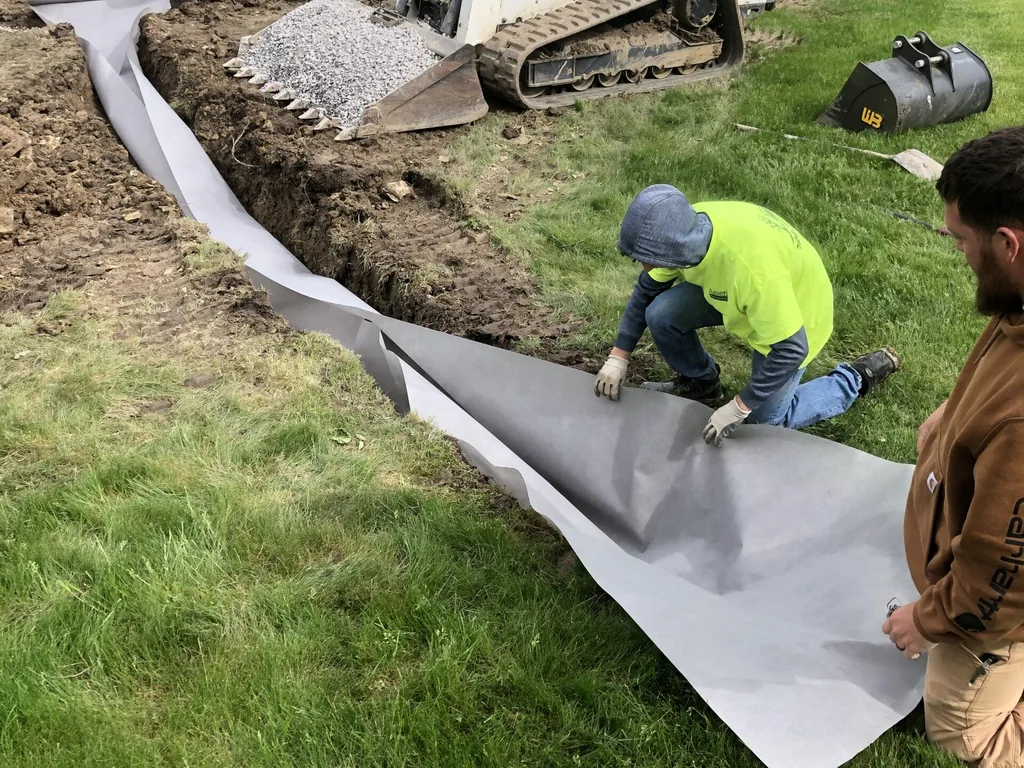
Exterior French drains for soggy yards and wet ground along the house, dug with a mini excavator. Perforated pipe in washed stone carries the water to an outlet on lower ground.
Learn More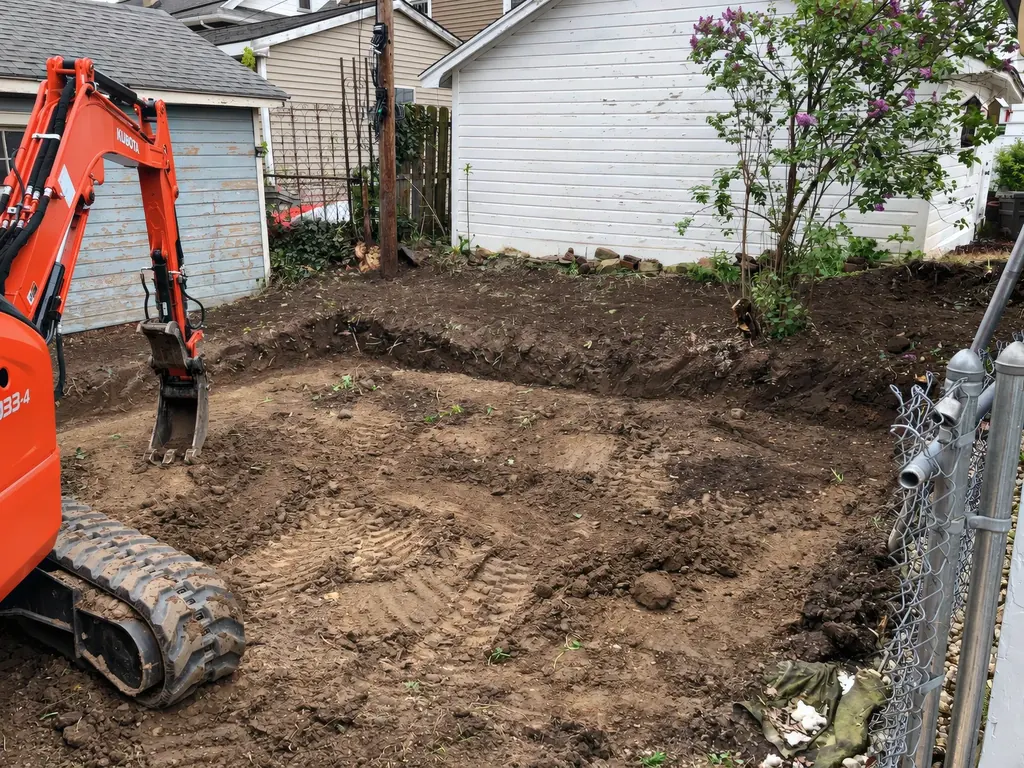
We find out why your yard holds water, then fix it with the method that fits. A mini excavator does the digging, even in tight back yards.
Learn More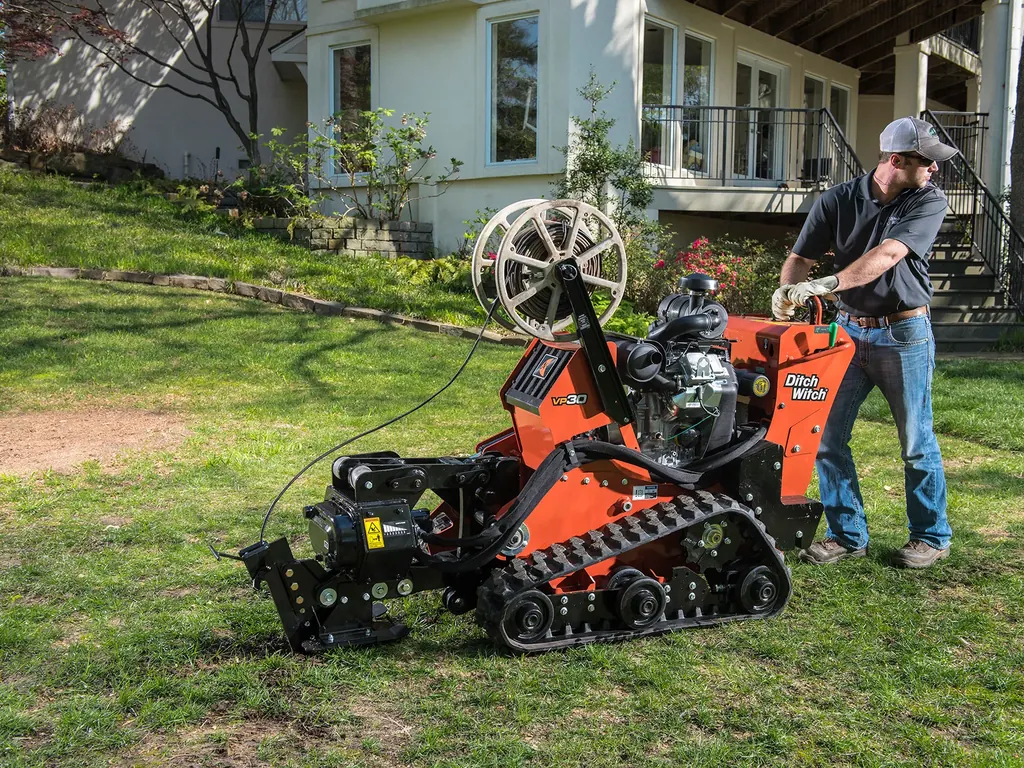
We install new in-ground sprinkler systems for lawns around St. Louis, laid out in zones. The lines go in through narrow trenches, and the yard goes back over them.
Learn MoreA few of the questions we hear most around St. Peters. If yours is not here, call or text and ask.
Tell us what needs clearing or digging and the town it is in, and text photos if you have them. Call or text (636) 893-3897, or send the form and we will get back to you.
Tell us what the property needs and where it is. We look at the job and put the quote in writing.